

Bhutan discovery: nature, communities, and trekking
13 Days
This itinerary is designed to experience and visit the sacred sites of Bhutan that were blessed by Guru Rinpoche during his long journey from India to Tibet in the 8th century AD, while also exploring the cultural and ecological richness of the country. Unlike other neighbouring Himalayan nations, Bhutan considers every element of creation sacred, including trees, mountains, rivers and lakes. As a result, Himalayan species that are endangered in neighbouring countries such as Nepal, India and Tibet thrive in Bhutan. Bhutan is also the last stronghold of Vajrayana Buddhism, a spiritual tradition considered among the most profound schools of teaching within the Buddhist world. Sacred monasteries, prayer flags fluttering along high ridges and red-robed monks reciting their prayers all give this kingdom an aura of another era.
This is BHUTAN: known to its inhabitants as Druk Yul — “The Land of the Thunder Dragon”. Its culture remains vibrant and the environment pristine as Bhutan continues to flourish in the 21st century. Beyond the majesty and grandeur of the natural landscape, the scenery allows communion with the divine through meditation and contemplation. Bhutan is home to Buddhist deities, immortals and Himalayan saints. Scholars, wandering yogis, saints and lay pilgrims have been irresistibly drawn to these remote and rugged mountains over the centuries in their search for wisdom and inspiration. Experience the landscapes they themselves blessed for pilgrims by following in their footsteps. As you travel toward hidden sacred sanctuaries and ancient monasteries (Gompa) from another world, crossing an untouched Himalayan environment, you will rediscover this sense of peace and solitude.
This journey is therefore designed to explore some of the lesser-known trails that lead travellers and trekkers into the most remote and unexplored regions of Bhutan. However, the trekking experiences included in this tour are accessible to everyone and are also suitable for beginners, provided they are in good physical health and condition. The selected routes are mostly day hikes with overnight stays in comfortable hotels of good quality. Only for a couple of nights are simpler accommodations planned, offering a more direct experience with local communities and the natural environment, spending one night in a monastery and another in a tent.
The sacred Paro Taktsang, the Tiger’s Nest, was blessed in the 7th century by the great tantric master Guru Rinpoche, who miraculously arrived here flying on the back of a flaming tigress in the form of Guru Dorje Drolo, coming from Khenpajong (eastern Bhutan) while traveling to Tibet to spread the Buddhist teachings in Mon-Yul, the “land of darkness”. Here he meditated for nearly three months and blessed numerous “Ney” (sacred places), subdued and transformed malevolent deities into protectors of Buddhism and even the entire region converted to the Buddhist faith. From the monastery of Pemayangtse, meaning “perfect sublime lotus”, to the beautiful monastery of Khachopelri, to the unique Bon monastery of Kewzing, and finally to the famous and majestic Tiger’s Nest (Taktsang), suspended among the clouds above Paro and blessed by Guru Padmasambhava himself, this journey offers a true immersion into the culture and spirituality of Bhutan.
JOURNEY OVERVIEW AND PROGRAM DETAILS
DAY 1: FLIGHT TO PARO
Paro – Thimphu
Your encounter with our enchanting kingdom begins with a flight over the Himalayas, which will lead you into the lush green valley of Paro: one of the most extraordinary spectacles in the world. During the flight you will admire some of the highest and most majestic peaks on Earth and enjoy the approach to the valley, with its primordial alpine forests, monasteries, temples and farmhouses immersed in splendid mountain solitude.
Upon arrival in Paro you will be welcomed by our representative, the tour guide, and transferred to Thimphu, the capital of Bhutan. The beautiful journey from Paro to Thimphu takes about one hour, initially following the Paro River to its confluence and then continuing along the Thimphu River valley to the city.
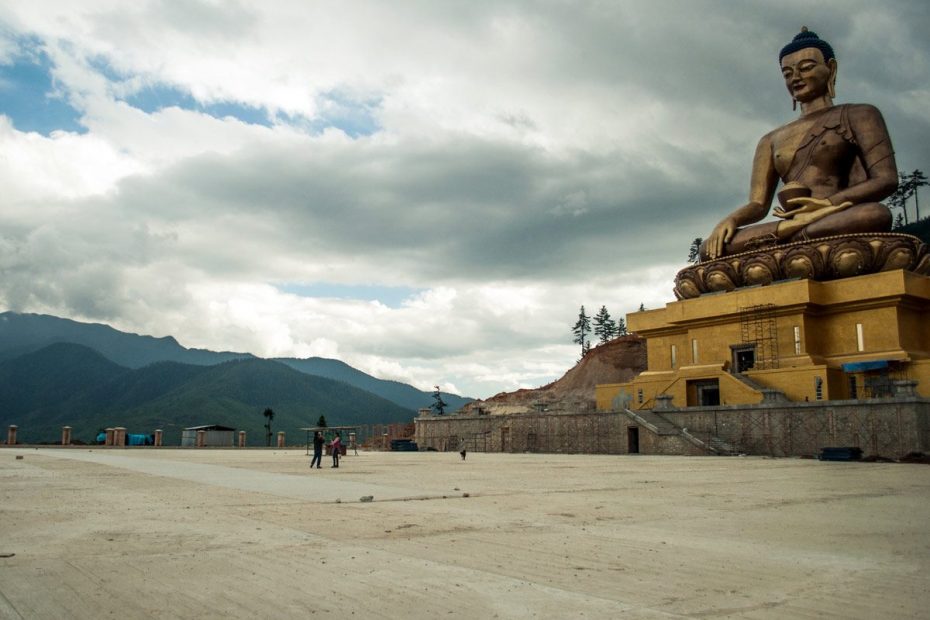
After hotel check-in, in the afternoon you will visit the tallest seated Buddha statue in Bhutan, the Memorial Chorten and the Takin area, home to the national animal.
This will be followed by a visit to CTAS (Choki Traditional Art School), located north of the capital in the beautiful mountain valley of Kabesa. Founded in 1999, the school provides training to disadvantaged youth in traditional arts such as drawing, thangka painting, weaving, embroidery, sculpture and wood carving. Students live and study within the school complex, made up of traditional white Bhutanese buildings situated on the sunny slope of a hill, surrounded by farms and villages. The school currently hosts 136 students, both male and female, aged between 15 and 25, who follow a six-year course of study. Here you will have the opportunity to interact with the students and try one of the traditional arts.
In the late afternoon you may attend a meeting with local experts to deepen your understanding of the concept of Gross National Happiness (GNH), a pillar of Bhutanese development.
Free evening to stroll around Thimphu.
Overnight in Thimphu (B/L/D)
DAY 2: TRANSFER TO TRONGSA
Thimphu – Trongsa
After breakfast, departure by car to Trongsa (about 5 hours, 180 km). The journey is scenic, through dense forests and picturesque mountain villages. After about 50 km you reach the Dochula Pass, where the 108 chortens of Druk Wangyal stand: here you can admire a breathtaking 360° view of the surrounding mountain ranges. Along the way you will enjoy views of the villages of Chendebji and Rukubji. Arrival in Trongsa and hotel check-in. In the late afternoon visit the majestic Trongsa Dzong, the ancient seat of power of Bhutan’s kings. If time permits, also visit the museum located above the Dzong. Overnight in Trongsa (B/L/D).
DAY 3: EXPERIENCING RURAL LIFE IN NABJI
Trongsa – Monpas – Nabji
After breakfast, departure to the Monpa village (about 3 hours’ drive), a small community where you can immerse yourself in the daily activities of the local population and contribute to the preservation of their cultural and environmental heritage. You will meet the Monpa people, originally hunter-gatherers and considered among the first inhabitants of Bhutan. They follow a combination of animist shamanism and Buddhism. Lunch in a local house, then transfer to Nabji. In the 8th century Guru Rinpoche arrived in Bhutan as a mediator between two conflicting kings: King Sindhu Raja of Bumthang and King Nangxchen of Assam. The pillar of the peace pact is preserved in the Nabji Lhakhang temple. The name Nabji derives from “Nabbi”, meaning “promise”. You will have the opportunity to join villagers in their daily agricultural work. This small village lies within the Jigme Singye Wangchuck National Park and lives mainly from agriculture. Visit a local farmhouse and participate in preparing lunch and distilling Ara, the rice wine. Overnight in Nabji (B/L/D).
DAY 4: TREKKING TO THE VILLAGE OF KORPHU
Nabji – Korphu – Nabji
Korphu is a small village reached after about 3 hours of walking from Nabji. For those who prefer not to walk, there is also a road accessible by vehicle. Others can reach Korphu on foot along an agricultural track. This visit offers an authentic immersion into community life. Tourism in these areas provides rural communities with an additional source of income alongside agricultural subsistence. In the afternoon return to Nabji, where you will visit the temple during a tsho (offering) ceremony. If your trip coincides with the Nabji festival period, you may witness traditional dances and celebrations performed by lay monks and villagers. On this occasion you may wear the traditional Bhutanese dress: the Gho for men and the Kira for women. Overnight in Nabji (B/L/D).
DAY 5: VISIT TO MONASTERIES IN THE PHOBJIKHA VALLEY
Nabji – Phobjikha
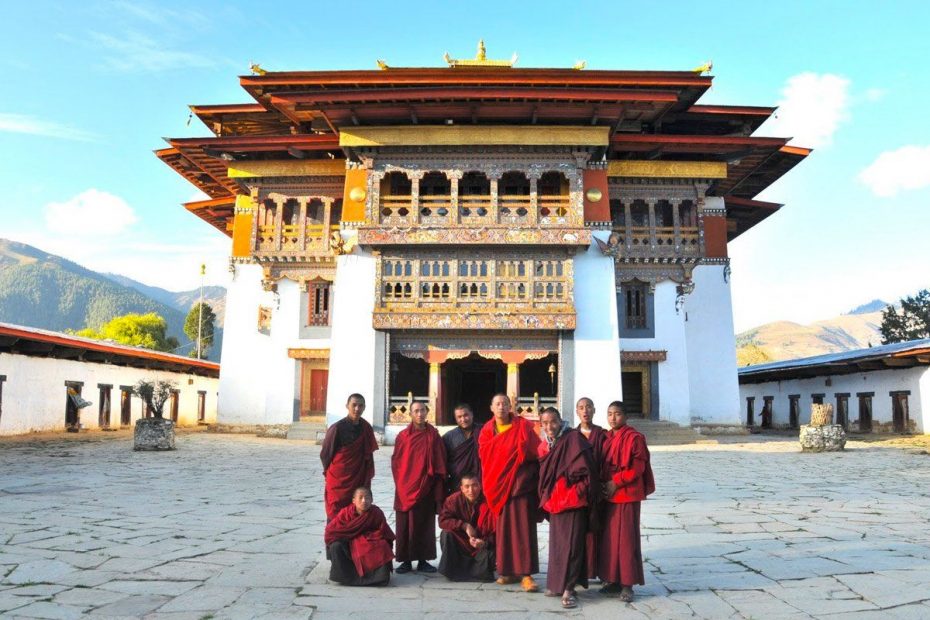
After breakfast departure by car to Phobjikha (about 5 hours), crossing the scenic Pelela Pass. Upon arrival in the valley, lunch. In the afternoon begin the Phobjikha Nature Hike: the trail starts below Gangtey Gompa near the Mani wall chorten and descends through pine forests with panoramic views of the valley where black-necked cranes feed in winter. You pass through the village of Khewa, surrounded by potato fields and alpine pastures, and visit the 14th-century Khewa Lhakhang temple, an ideal place for reflection. At the end of the hike visit the Crane Information Centre to learn about conservation projects carried out with the RSPN. Then visit Gangtey Monastery, an important Nyingma institution founded in the 17th century. At 18:30 join the monks for evening prayers (18:30–19:30). Overnight in Phobjikha (B/L/D).
DAY 6: DISCOVERING PUNAKHA
Phobjikha – Punakha
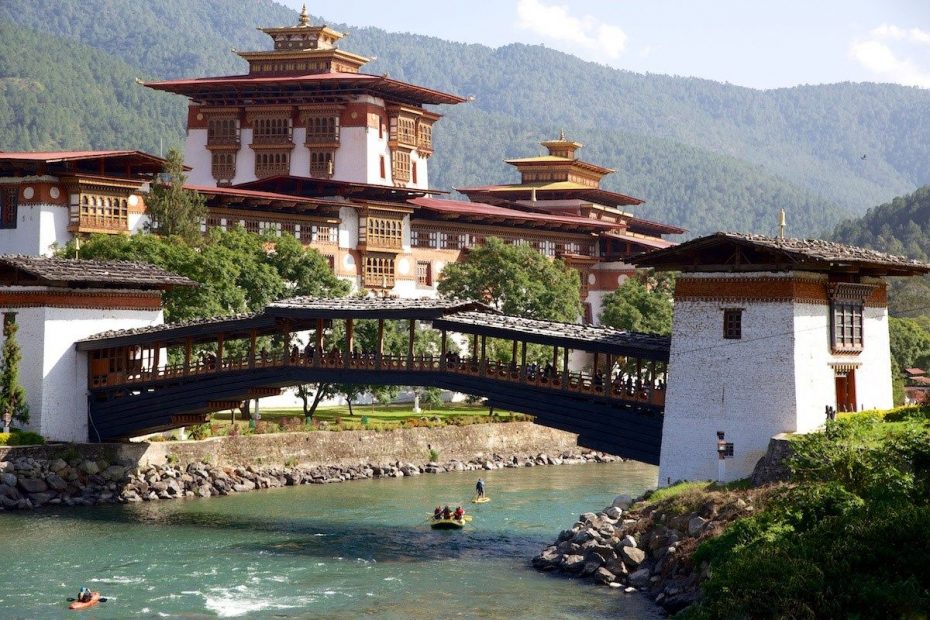
In the morning you may participate at the Shedra in the Thrusel ritual (smoke purification) to dispel negative energies and invite good fortune. After breakfast transfer to Punakha (about 2 hours) and hotel check-in. Visit the majestic Punakha Dzong (1637–38), the second oldest fortress and one of the largest in Bhutan, an architectural masterpiece destined to become a UNESCO World Heritage Site. Then take a short 20-minute walk to Chimi Lhakhang, the Temple of Fertility, built by the folkloric saint Drukpa Kinley. Overnight in Punakha (B/L/D).
DAY 7: TREKKING TO THE VILLAGE OF LAYA
Punakha – Gasa – Laya
After breakfast transfer by car to Gasa (about 4 hours), passing through the villages of Shari, Tashithang and Damji. Arrival in Gasa for lunch in a local farmhouse. After lunch continue by car to Koina, where the trek to the village of Laya begins. Before reaching Laya we will show our permits at the Taksemakha check post. From here it takes about 1 hour to reach the village. Arrival and check-in at the Laya homestay. Overnight in Laya (B/L/D).
DAY 8: EXPERIENCE THE NOMADIC LIFE OF LAYA
Laya
Today you will have the opportunity to interact with your host family, immersing yourself in the local culture of high-mountain communities. The Layaps are a community of herders who live a semi-nomadic life, raising yaks in high mountain pastures, reflecting a traditional lifestyle passed down for generations. Here you will truly have the unique opportunity to experience their traditional lifestyle through activities such as yak riding, archery, herbal baths, cooking classes and evening bonfires. During the famous Highlander Festival, the Layaps display their unique cultural heritage through traditional dances, music and intricate ceremonies. The festival, held at an altitude of 4,000 meters, celebrates, promotes and preserves the lifestyle and culture of Bhutan’s high-mountain nomadic communities, supporting the local economy and showcasing the beauty and wonders of these highlands, demonstrating the resilience of these communities. Overnight in Laya (B/L/D).
DAY 9: EXPERIENCE THE NATURAL HOT SPRINGS OF GASA
Laya – Gasa
Spend the last morning with your host family or take a short trek into the surrounding mountains near the festival grounds to observe the beautiful untouched glacial lakes. After lunch depart for the trek to Gasa. Arrival, family check-in and visit to the famous Gasa Dzong. Afterwards you will have the opportunity to immerse yourself in the natural hot springs to rejuvenate body, mind and spirit. Each pool has a different temperature and is believed to have specific therapeutic properties; locals believe these waters bring healing benefits as well as strong spiritual value. Relax in this peaceful and pristine environment before returning to your host family for dinner. Overnight in Gasa (B/L/D).
DAY 10: EXCURSION TO CHERI MONASTERY
Thimphu
After breakfast transfer to Thimphu (via Punakha) with a stop along the way at Dochula Pass to admire the surrounding mountains. Arrival in Thimphu and hotel check-in. Then excursion to Cheri Goemba Monastery. After about a 30-minute drive to Dodena, continue on foot with a 45-minute hike through beautiful forest trails to Cheri Monastery, built in 1620. This trek offers an authentic glimpse into Himalayan vegetation and the natural heritage of the region. The trail passes through pristine forest often inhabited by many bird species, and it is possible to spot wildlife such as monkeys or deer. The monastery of Cheri, among the most scenic in the country, is also one of the main spiritual retreat centers and pilgrimage destinations. Founded by Ngawang Namgyal, the Rinpoche who unified Bhutan politically and spiritually, the monastery remains an important center for the Drukpa Kagyu school of Vajrayana Buddhism. Inside it is possible to admire a beautiful painting depicting Guru Rinpoche on a rock. In the late afternoon return to Thimphu for dinner and overnight stay. Overnight in Thimphu (B/L/D).
DAY 11: VISIT TO THE TEMPLES OF PARO
Thimphu – Paro
After breakfast depart for Paro. Arrival in Paro and hotel check-in. Later visit the evocative Kichu Lhakhang (659 AD), the oldest temple in Bhutan, where you may light a butter lamp. Kichu Lhakhang is one of the oldest temples in Bhutan, built in the 7th century by the Tibetan king Srongtsen Gampo. Then visit Paro Dzong (Rinpung Dzong), “the fortress on a heap of jewels”, built in 1644. From the fortress descend to the traditional covered wooden bridge. The dzong is the administrative seat of the district and also houses a monastic school. The central tower of the Dzong (Utse) represents one of the finest examples of wood craftsmanship in the country. Free evening to stroll through the town center of Paro. Overnight in Paro (B/L/D).
DAY 12: EXCURSION TO THE TIGER’S NEST MONASTERY
Paro
After breakfast begin the day with a short drive to the upper Paro Valley. On a clear day you may enjoy unforgettable views of Mount Chomolhari, known as the “Goddess Mountain”, rising to 23,640 feet. Then a short transfer to the starting point of the trail to Taktsang. Excursion to Taktsang Monastery, the most famous in Bhutan. Taktsang means “Tiger’s Nest”, so called because Guru Rinpoche is believed to have flown to this place on the back of a flying tigress at the end of the 7th century. Among blue pines and open sky, the monastery stands dramatically on a cliff almost 2,700 feet above the floor of the Paro Valley. Here you may offer a butter lamp. Lunch at Taktsang Café. Afterwards visit a farmhouse where you can observe traditional Bhutanese methods for producing rice wine, preparing Zaw and Suja (butter tea), and learn traditional games such as archery and Degor (a traditional stone throwing game). In the evening enjoy a traditional hot stone bath. Return to the hotel for a well-deserved rest. Overnight in Paro (B/L/D).
DAY 13: DEPARTURE FROM PARO
Paro
Transfer to the airport and return flight. You will carry in your heart the kindness of this kingdom: may it inspire peace in you and in those around you. Safe travels!
ACTIVITIES
- Explore the cultural and ecological richness of Bhutan
- Participate in artistic and craft activities at the Choki Traditional Arts School
- Visit a handmade paper factory
- Enjoy the 360-degree panoramic view of the mountain ranges from Dochula Pass
- Meet the only indigenous community of Bhutan in the Monpa village
- Interact with local communities in the villages
- Enjoy a trekking experience from Nabji to the village of Korphu
- Enjoy a pleasant nature trek in the Phobjikha Valley
- Participate in a Thrusel ritual (spiritual purification) to release negative energies and invite good fortune
- Join the monks during the offering ceremony at Gangtey Monastery
- Walk through rice fields to reach the Chimmi Lhakhang Fertility Temple in Punakha
- Visit temples and monasteries
- Experience the life of the nomadic communities of Laya
- Immerse yourself in the natural hot springs of Gasa
- Trek through nature to reach Cheri Monastery
- Hike to Taksang, the famous Tiger’s Nest Monastery, enjoying unforgettable views of Mount Chomolhari
SOCIAL AND ENVIRONMENTAL IMPACT
All the itinerary has been designed in order to promote direct or indirect benefits for local communities, environment and cultural heritages. When possible we have selected traditional accommodations sensible to social and environmental issues, following general principles and practices of responsible tourism. The tour is designed to include the activities of various local and tribal communities, through the use of a number of local homestays which get economic support from the trip. Bhutan is a treasure house of indigenous culture, multi ethnic groups and Hill tribes. It’s amazing a small country would have 19 different dialects. Such kind makes Bhutan a unique destination. For the benefit of local community the Bhutan government decide to open few indigenous village for visitor whilst conserving the natural resources and respecting their way of life .which involves communities to be environmentally sustainable, contribute to the community school, library, also conservation of wild life project . Some of these are contribution to the Gross National Happiness (GNH). In Thimpu, the capital of Bhutan, the tour will support the CTAS “Choki Traditional Art School”, whose main mission is to preserve the traditional arts and crafts of Bhutan from fading away, and to empower youth with livelihood skills. This school is the only private institute providing training on traditional arts and crafts in Bhutan. It provides free tuition, food and lodging facilities to the economically disadvantaged youth of Bhutan. By teaching and promoting traditional skills of Bhutan the institute has high potential to create new jobs. Zorin Chusum (Thirteen Crafts) can provide a real source of income and employment. In Thimpu you will also visit a Voluntary Artists’ Studio, known as VAST, which was set up in 1998 by a group of professional artists as a non-profitable and non-governmental organization (NGO). This informal organization was set up with the sole aim of providing an opportunity to the Bhutanese youth to participate and develop their potential talents as well as share social responsibilities through artistic explorations and other socially useful and productive work. Its primary objective is to provide potential vocational skills and alternative positive use of free time and facilitate participation in the national and international art realm. You will have an exposure visit to the youth centenary village, part of “Simply Bhutan”, a unique project of the Bhutan Youth Development Fund. This institution runs programs in order to build leadership skills, encourage teamwork and promote the value of service among youth. Through advocacy work and strategic partnerships, the Fund works to encourage youth participation, raise awareness of youth issues and promote youth-oriented policy. We invest in Bhutan’s future, one youth at a time.
TIPS BEFORE DEPARTURE
A conscious approach to travel requires a considerable capacity and willingness to adapt and adjust to the local environment and culture. If you wish to travel with us we request you to be open enough to experience local culture, religious and traditions without bias and pre-conceived ideas you might have before the departure and which belong to our Western cultural way of thinking. Exploring with fresh eyes, with patience and openness, you will be able to access the real essence of the cultural heritages and spirituality through the places and people you are going to meet; if you are ready to do this effort you will really enjoy the beauty of the rich culture and religiousness of Bhutan, the extraordinary of the nature, the solemnity of Buddhist monasteries and the holy sites blessed by Guru Padmasambhava himself. In Bhutan the weather could get wet with sporadic or long showers. Please pack appropriate clothing. Bhutan’s changeable climate means you have to bring an assortment of clothes, including rain gear. Mornings and evenings could be quite cold. Carry with you appropriate warm clothing especially for the evening. A layered wardrobe probably makes the most sense. However, warm clothing is required throughout but more specifically from October to April. Good walking shoes or hiking boots are essential even if you are not hiking. Because of the altitude, a hat or cap and a good pair of sunglasses are essential. Because of the long distances between towns and villages bring the medicines you’ll need along with some first-aid supplies. A good flashlight (torch), water bottle and polarizing filter for your camera will also come in very handy. A backpack is necessary to carry essentials/cameras while you are on local excursions. Monasteries and temples are places of worship, so you should be dressed accordingly. Admission might be denied to men and women wearing short pants/skirts, sleeveless t-shirts/blouses. Getting to Bhutan is not quite straightforward. The Bhutanese Government monitors visitors into and out of Bhutan. On entry into Bhutan, you will meet an official recognised guide, who will escort you everywhere. He will be with you until you depart. You are strongly recommended to engage with us at an early stage of you are planning to visit Bhutan during Festival periods. This itinerary offers good opportunities for cultural exchange, adventure, hiking, wildlife spotting and moderate trekking. However it is not fit for everyone, due to moderate trekking and altitude. Check with your physician to confirm that you are healthy to travel. Inform your doctor where you are going to see if there are any special concerns. Because of the climate and general lack of medical facilities in the villages, you should be reasonably fit before departure.
HOTELS
In Bhutan, we have selected mid category hotels and homestays with all the major facilities and comforts but in the true tradition of Bhutanese hospitality. While Nabji village the hotel have very basic facilities and in Gelephu the eco-camp as a couple of bamboo cottage and tents.
TRANSPORT
In Bhutan we have selected mid-range hotels that reflect the authentic tradition of Bhutanese hospitality. In the villages of Laya and Gasa accommodation will be in local homestays, while in the village of Nabji the accommodation is very simple but equipped with all basic services.
WHEN TO GO
It is possible to visit Bhutan all year around but the best weather is generally:
Mar–May (spring)/ MidSep–MidNov (autumn). Spring (March April & May) is the most beautiful time of the year, resplendent and ablaze with a spectacular array of bright colours. Also, it is the time to witness the famous Paro tsechu festival. The Paro Tshechu is held every spring and is one of the most colourful and significant events in Paro Dzongkhag (district). Autumn (September, October & November) is lovely with clear and crisp blue skies, providing a grand view of some of the tallest unclimbed mountains in the world. It is the best time for trekking and for travelling. This is instead the right time to assist to the Thimphu tsechu festival!